Growth Science · Pillar
Business growth strategy frameworks — and what comes next.
CEOs and boards do not need another 2×2. They need an operating model. This is a field guide to the classic business growth strategy frameworks — and how Growth Science extends them into systems that compound.
The four families
Four families of business growth methodology.
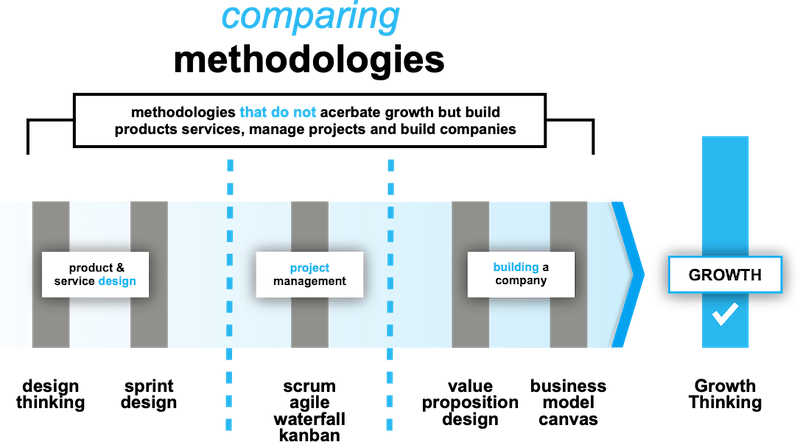
Every well-known framework belongs to one of four families. The first three design, ship, or stand up the business. Only the fourth — Accelerating Growth — exists to compound it. That is the family Growth Science lives in, and the gap most boards still underestimate.

Reference diagram
The four families of growth methodology. Growth Science extends the Accelerating Growth family into an operating model.
Source: mygrowththinking.com
Family
Offering Design
Design and improve the product or service itself.
- Design Thinking
- Google Design Sprints
- Lean Startup
- Double Diamond
- Kano Model
Family
Managing Projects
Implement and ship what's been designed, reliably.
- Agile
- Scrum
- Waterfall
- Kanban
- PRINCE2
Family
Building a Company
Stand up the business model and the entity around it.
- The Business Model Canvas
- The Value Proposition Canvas
- Lean Startup Canvas
- Blitzscaling Canvas
- Business Model Innovation Framework
Family
Accelerating Growth
Compound growth once the company exists. The Growth Science territory.
- Pirate Funnel AARRR
- G.R.O.W.S.-process
- T-shaped Growth Hacker
- One Metric That Matters
- North Star Metric
The comparison matrix
Compare 20 growth frameworks side by side.
Twenty of the most-used frameworks scored on three axes: impact on growth, complexity to operate, and fit with the Growth Science operating model. Every framework here is compatible — the question is what role it plays in the system you're building.
The five you already know
Ansoff Matrix · BCG Growth–Share Matrix · McKinsey Three Horizons · Blue Ocean Strategy · Porter's Generic Strategies — all sit inside the families above. Each names a strategic move: market penetration, portfolio reallocation, three-horizon balance, uncontested space, cost vs differentiation. None of them, on their own, run the system that compounds the bet. That gap is what the matrix below exposes — and what Growth Science is built to close.
Reference matrix
The original Growth Thinking comparison matrix — twenty frameworks across the four families. The semantic table below mirrors this for accessibility and search.
Source: mygrowththinking.com
| Family | Framework | Impact | Complexity | Fit |
|---|---|---|---|---|
| Accelerating Growth | Pirate Funnel AARRR | High | High | Yes |
| Accelerating Growth | G.R.O.W.S.-process | Mid | Mid | Yes |
| Accelerating Growth | T-shaped Growth Hacker | Low | Mid | Yes |
| Accelerating Growth | One Metric That Matters | Low | Low | Yes |
| Accelerating Growth | North Star Metric | Low | Low | Yes |
| Building a Company | The Business Model Canvas | High | Low | Yes |
| Building a Company | The Value Proposition Canvas | High | Low | Yes |
| Building a Company | Lean Startup Canvas | Mid | Mid | Yes |
| Building a Company | Blitzscaling Canvas | Mid | Mid | Yes |
| Building a Company | Business Model Innovation Framework | Low | High | Yes |
| Managing Projects | Agile | Mid | Mid | Yes |
| Managing Projects | Scrum | Mid | Mid | Yes |
| Managing Projects | Waterfall | Low | Low | Yes |
| Managing Projects | Kanban | Mid | Low | Yes |
| Managing Projects | PRINCE2 | Low | High | Yes |
| Offering Design | Design Thinking | Mid | Mid | Yes |
| Offering Design | Google Design Sprints | Mid | Low | Yes |
| Offering Design | Lean Startup | High | Mid | Yes |
| Offering Design | Double Diamond Design | Low | Mid | Yes |
| Offering Design | Kano Model | Low | Low | Yes |
Source: Growth Thinking comparison framework, restructured around the Growth Science operating model.
The gap
Why growth frameworks stall. Operating systems win the decade.
The matrix shows it: most boards already own the vocabulary — penetration, development, diversification, portfolio reallocation, category creation. The gap is not the framework. It is the operating model that turns a chosen strategy into compounding, defensible growth before the market closes the window. That is the work of advisory engagements — wiring the system around the bet the board has already made.
The Growth Science extension
Growth Science: the operating model. From framework to system.
Growth Science is the operating model that sits underneath whichever framework you choose. Five principles, engineered into how the organization decides, deploys, and compounds.
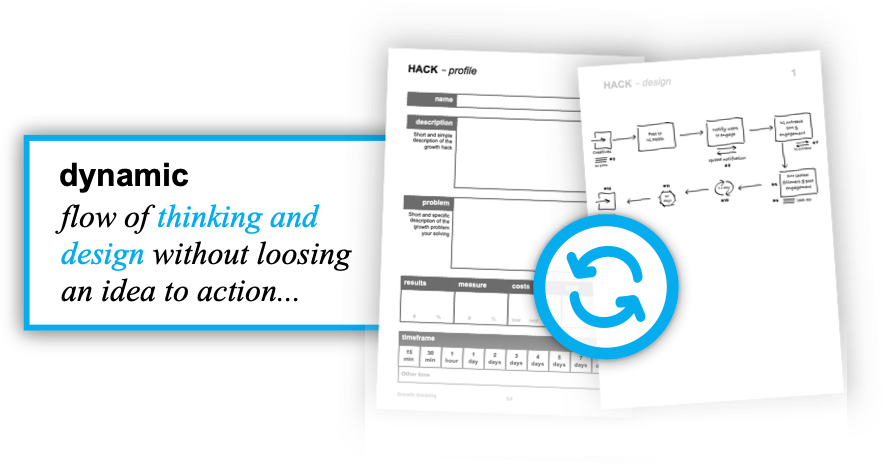
Reference overview
The dynamic system view — how signal, leverage, velocity, compounding, and defensibility interlock.
Source: mygrowththinking.com
01
Signal over plan
Replace annual planning theatre with continuous signal capture — capital flows, regulation, demand shifts, talent movement.
02
Leverage over effort
Identify the few decisions where one move shifts ten outcomes: platforms, partnerships, regulatory wedges, category creation.
03
Velocity over volume
Measure the speed from insight to deployed decision. Growth compounds when velocity is engineered into the operating model.
04
Compounding over campaigns
Design moves so each one increases the return on the next — data, distribution, brand, and capability all stack.
05
Defensibility over reach
Build moats while growing: proprietary signal, switching cost, regulatory position, network effects. Growth that can't be copied.
The operating loop
The 5-step growth operating loop.
Each Growth Science principle runs through a five-step loop — Profiling, Designing, Sequencing, Testing, Learning. Each pass produces a deployable move. Twenty passes produce a playbook the organization can run without you in the room.

Reference loop
The five-step design loop visualized end to end — each pass produces a deployable move.
Source: mygrowththinking.com

Reference detail
The step-by-step view: where Profiling, Designing, Sequencing, Testing, and Learning attach to the system.
Source: mygrowththinking.com
01
Profiling
Name, scope, expected ROI, and timing. The bet stated plainly so the board can decide.
02
Designing
Map the growth move as a workflow — leverage points, dependencies, the shape of the system.
03
Sequencing
Attach detail to every step: owners, signals, gates, and the failure modes you're prepared to absorb.
04
Testing
Pass / fail in the wild. Cheap probes before expensive commitments, on a clock the market sets.
05
Learning
Patterns extracted across hacks compound — into the next move, and into how the organization decides.
The 1 : 5 : 20 learning system
How a single move becomes a playbook.
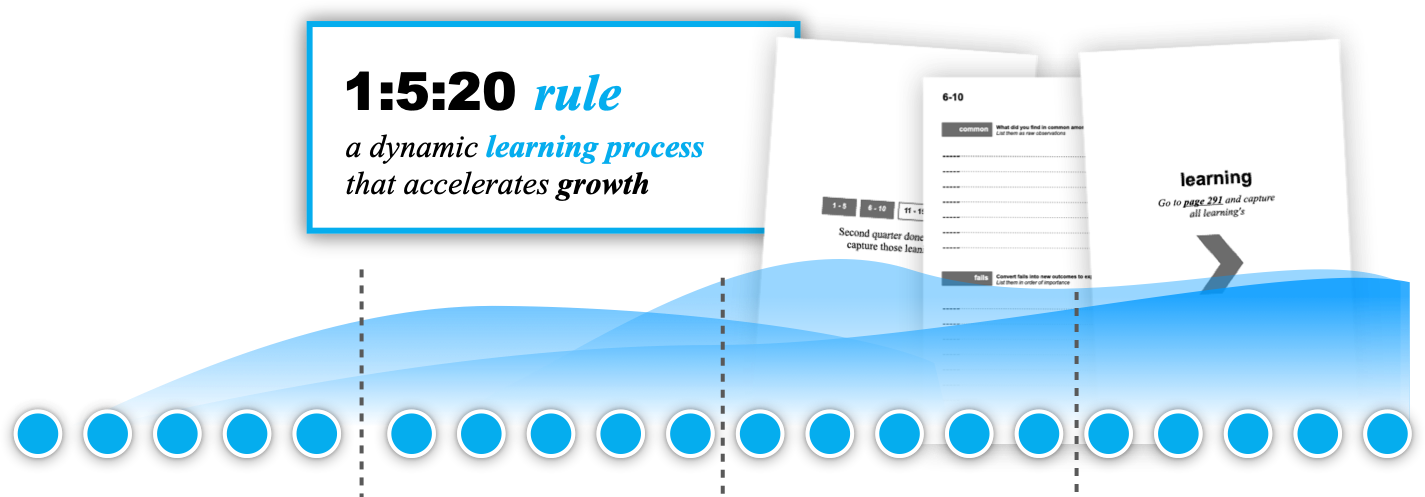
Reference diagram
The accelerated learning system — one move reviewed, five moves patterned, twenty moves synthesized into a defensible playbook.
Source: mygrowththinking.com
1
One move
Every move is reviewed on completion. What worked, what failed, what to keep.
5
Five moves
Every fifth move triggers a pattern review across the set — emerging signal, not anecdote.
20
Twenty moves
A full cycle synthesises into a defensible playbook other operators can run.
For the board
From framework to systematic growth.
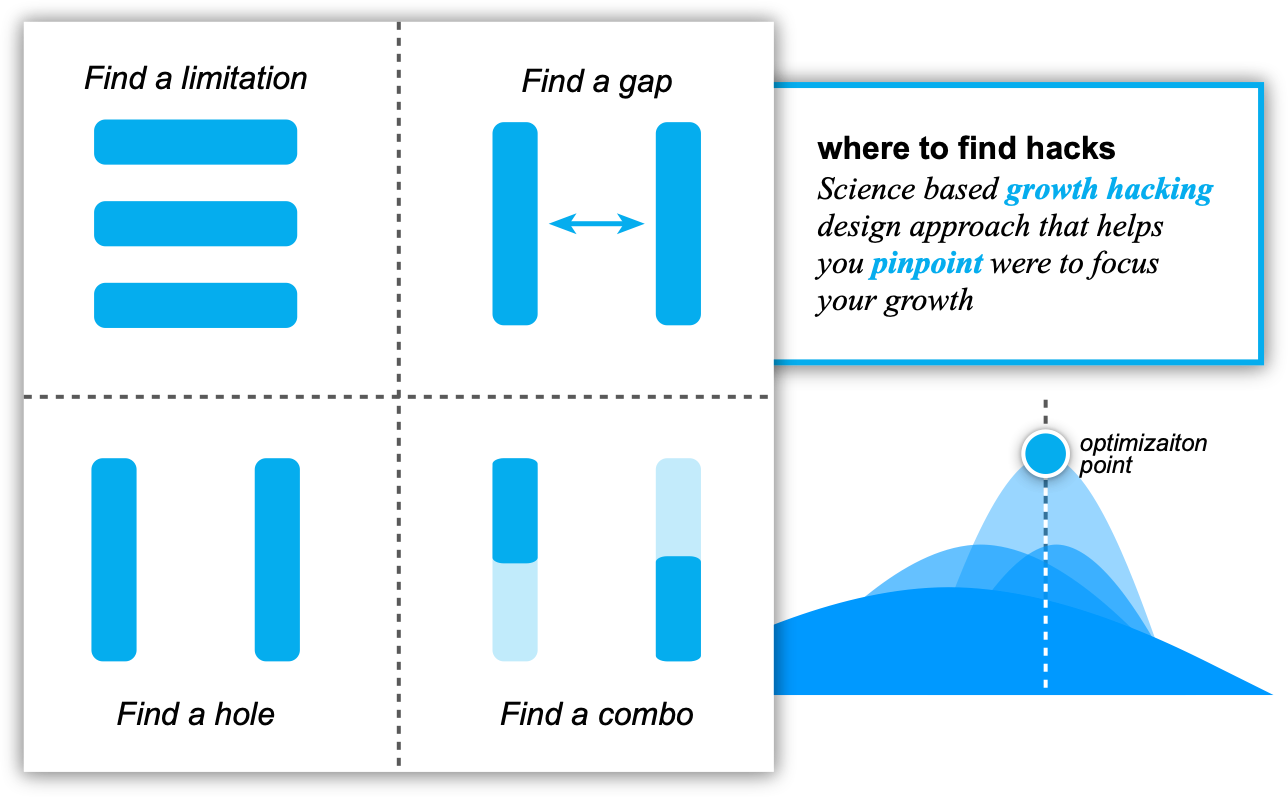
Where to act
Where in the system to apply a growth move — the map boards use to pick the bet.
Source: mygrowththinking.com
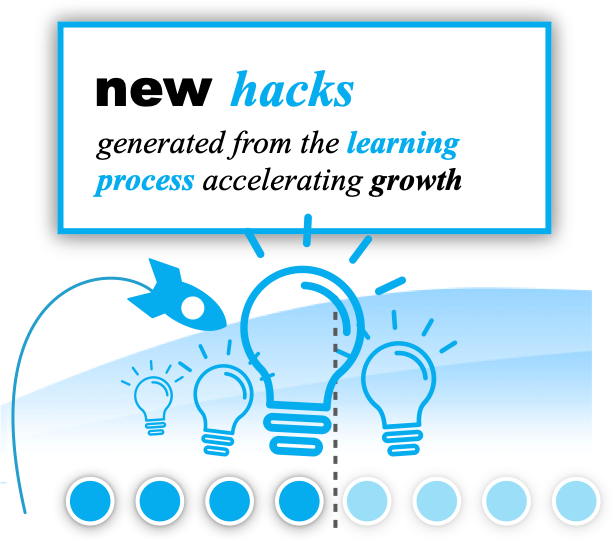
How to generate
How the loop generates new moves continuously — the engine, not the campaign.
Source: mygrowththinking.com
Step 01
Name the bet
Use a classic framework to name the strategic move — market, product, portfolio, or category. Get the board aligned on the bet, not the slogan.
Step 02
Wire the system
Install the Growth Science loop: signal capture, leverage selection, velocity gates, compounding metrics, defensibility checks. This is the operating model.
Step 03
Run the loop
Review quarterly against signals and compounding metrics, not just revenue. The framework named the bet. The system makes the bet pay back.